
Orange County VA Real Estate Market Update: What Buyers and Sellers Need to Know in August 2026
Orange County VA Real Estate Market Update: What Buyers and Sellers Need to Know in August 2026
If you've been wondering whether the Orange County, Virginia real estate market is slowing down, the August numbers give us a pretty clear answer: yes, the market is taking longer to move—but that doesn't mean homes aren't selling.
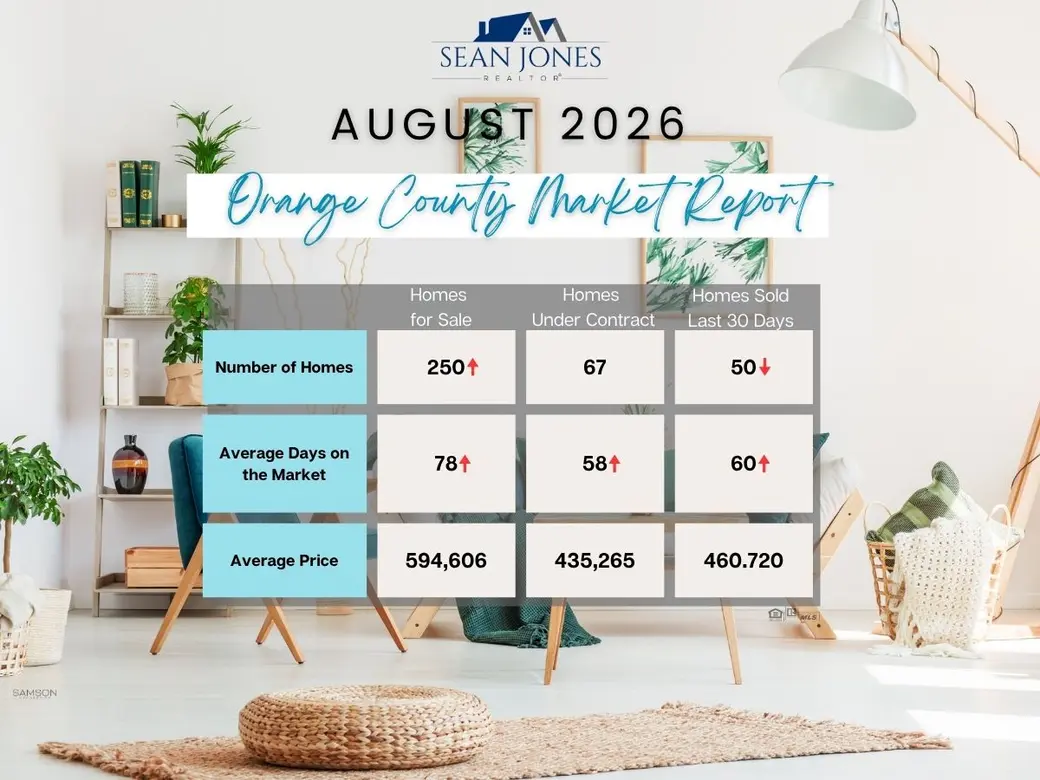
The latest local Orange County MLS data shows a market that's becoming more balanced. The number of active homes for sale remained steady at 253 properties in August, but the average days on market for those active homes increased to 78 days. There were also 67 homes under contract, which remained relatively steady compared with the previous month, although the average time it took those homes to go under contract increased to 58 days.
Then there's the sales activity. Orange County had 50 home sales in August, 13 fewer than July, while the average days on market for homes that actually sold jumped significantly—from 43 days in July to 60 days in August.
Those numbers tell us something important. Buyers have more time, sellers need to be more patient, and pricing is becoming increasingly important.
There's another trend that I think is particularly interesting: almost two-thirds of the homes that sold in August offered closing-cost assistance to buyers. That percentage has been steadily increasing throughout 2026, and it's one of the clearest signs that sellers are having to adjust to the market we're in today.
Orange County VA Real Estate Market: August 2026 at a Glance
According to the latest local Orange County MLS data, the market looked like this in August:
-
253 active homes were on the market.
-
Active homes averaged 78 days on market.
-
67 homes were under contract, remaining relatively steady from the previous month.
-
Homes going under contract took an average of 58 days.
-
50 homes sold in August, which was 13 fewer than July.
-
Homes that sold averaged 60 days on market, compared with 43 days in July.
-
Nearly two-thirds of August sales included closing-cost assistance for the buyer.
Put those numbers together and you get a market that's clearly moving at a slower pace.
That doesn't necessarily mean prices are falling across the board. It means buyers aren't moving as quickly as they did earlier in the year, and sellers are increasingly having to give buyers something to make the transaction more attractive.
That's a meaningful change from the highly competitive market many buyers experienced just a few years ago.
More Homes Are Available, But Buyers Aren't Absorbing Them as Quickly
The number of active homes stayed steady at 253 in August, but the 78-day average time on market tells us those homes aren't turning over as quickly as they were earlier in the year.
This is one of those situations where looking at inventory alone can be misleading. If we had 253 homes available and they were all selling within a couple of weeks, I'd describe the market very differently. Instead, we're seeing those homes remain available longer, which gives buyers more opportunity to compare properties and negotiate.
If you're shopping in Orange, Locust Grove, Lake of the Woods, Rhoadesville, Unionville, or other parts of the state, you may have more opportunity to take your time and compare properties rather than feeling like you have to make an immediate decision.
That doesn't mean every home is sitting around waiting for a buyer. A well-priced property in excellent condition can still generate strong interest but buyers have more leverage than they did when inventory was extremely tight and that distinction matters.
Homes Under Contract Are Taking Longer to Get There
Another number I find particularly interesting is the 67 homes under contract. That number remained relatively steady from the previous month, which tells us buyers are still active and transactions are still happening.
When then you look at how long it took those homes to get under contract that number increased to 58 days.
In other words, the number of pending transactions didn't fall dramatically, but buyers are taking longer to make decisions and properties are taking longer to attract an accepted offer. That's a subtle shift, but an important one.
It suggests that buyers aren't necessarily disappearing from the market. They're simply becoming more selective. They're looking at the price, the condition, the location and what else they can buy for the same amount of money. They're also paying attention to what sellers are willing to contribute toward closing costs.
August Home Sales Fell—and Days on Market Jumped
August had 50 completed home sales, which was 13 fewer than July. Even more telling is what happened to days on market. Homes that sold in August averaged 60 days on market, compared with just 43 days in July.
That's a 17-day increase in the time it took homes that ultimately sold to find a buyer.
For sellers, this is something to pay attention to. It doesn't mean your house will necessarily take 60 days to sell. Some properties will sell much faster, while others may take considerably longer. What it does tell us is that the market is no longer rewarding sellers simply for putting a house on the market.
Price, condition and presentation matter.
If buyers have 253 homes to choose from, your property has to give them a reason to choose it over the other homes they're considering. And if a comparable property is offering closing-cost assistance while yours isn't, that can become part of the buyer's decision too.
Closing-Cost Assistance Has Become a Major Part of the Conversation
This may be the most interesting trend in the August numbers.
Nearly two-thirds of the homes that sold in Orange County during August offered some form of closing-cost assistance to the buyer. Even more important, that percentage has been steadily increasing throughout 2026.
Why does that matter?
It matters because buyers aren't just looking at the purchase price anymore. With mortgage rates still considerably higher than the unusually low rates buyers enjoyed several years ago, the cash required to get to closing can be a major obstacle.
A seller offering several thousand dollars toward allowable closing costs can make a meaningful difference to a buyer, depending on the loan program and the buyer's circumstances. It can reduce the amount of cash the buyer needs to bring to closing while allowing the seller to maintain a higher contract price.
For sellers, there's an important lesson here: a closing-cost concession is not necessarily the same thing as simply reducing the price.
There are situations where a buyer may benefit more from a seller contribution than from an equivalent reduction in the purchase price. Whether that makes sense depends on the transaction, financing, appraisal and negotiated terms, but the increasing use of these concessions tells us something about where the leverage is moving.
Buyers are asking for help, and sellers are increasingly willing to provide it.
What Does This Mean If You're Buying a Home?
If you're a first-time buyer, I think the August numbers are encouraging—not because homes have suddenly become cheap, but because you have more time and more negotiating opportunities than buyers had during the most competitive periods of the market.
You may have an opportunity to negotiate price, request closing-cost assistance, ask for repairs, or negotiate other terms depending on the property.
That doesn't mean you should make an unreasonable offer simply because the market has slowed. Sellers still have expectations, and good homes can still attract buyers.
Instead, I'd encourage buyers to look at the entire transaction.
A $400,000 home with $10,000 in closing-cost assistance may have a different financial impact than a $390,000 home with no assistance. The best deal isn't always the house with the lowest asking price. It's the one that makes the most sense when you consider price, financing, condition, closing costs, monthly payment and your long-term plans.
If you're a first-time buyer, don't overlook the importance of getting your financing lined up before you start seriously shopping. Knowing what you're comfortable spending—and not simply what a lender says you can borrow—can make the process much less stressful.
What Does This Mean If You're Selling?
Sellers need to adjust their expectations.
The August numbers don't suggest that Orange County is a market where you can simply put a house on the market, wait a few days and choose from multiple offers. Instead, buyers are taking longer, they're comparing more properties, and they're increasingly expecting sellers to help with the cost of getting to closing.
That doesn't mean you should automatically offer the maximum possible concession. It means you should understand what you're competing against before deciding how to price and market your home.
If several similar homes are available, ask yourself a simple question:
Why should a buyer choose my home?
Maybe it's the location. Maybe it's the condition. Maybe you've got a great yard, updated kitchen, finished basement, acreage, waterfront access or another feature buyers can't easily duplicate.
Or maybe the answer is price.
Sometimes the best strategy is not to give away thousands of dollars in concessions. Sometimes it's to price the home correctly from the beginning. There's no universal answer, which is why looking at the individual property and its competition is so important.
Should You Buy or Sell Now—or Wait?
This is where I think it's important to step away from the headlines.
You may hear someone say the market is slowing and conclude that you should wait. Someone else may tell you rates are going to fall and conclude that you should buy immediately but neither approach is necessarily right.
If you're buying a home and you've found the right property, the payment fits your budget and you're planning to stay for several years, today's market may actually give you opportunities that weren't available a few years ago.
If you're selling your home, you may still have significant equity in your property—but you need to price and position the home based on today's buyers, not the market we had several years ago. If you're unsure, there's nothing wrong with getting the numbers before making the decision.
That's particularly true in Orange County because the market can vary considerably between communities and property types. A home in Lake of the Woods can behave differently from a property on several acres in Unionville or Rhoadesville. A newer home can compete differently from an older property that needs updating.
There isn't one Orange County real estate market. There are a lot of smaller markets within it.
What I'll Be Watching as We Move Into Fall
Going into September, there are a few things I'd be watching closely.
First, will the number of active homes continue to hold around the current 253-home level, or will inventory begin to build again? Second, will the number of completed sales recover from August's 50 transactions, and perhaps most importantly, will the percentage of sellers offering closing-cost assistance continue to increase?
That last statistic may tell us a lot about the balance between buyers and sellers.
The broader Virginia market is also experiencing changes in inventory and buyer activity, but local numbers are what matter when you're making a decision about your home. National and statewide headlines can provide useful context, but they don't tell you what a particular neighborhood in Orange County is doing.
In Orange County, the August numbers point toward a market where buyers have more time, sellers have to compete harder, and negotiation is becoming a bigger part of the transaction and that's not necessarily bad news.
For home buyers, it can mean more choices and better negotiating opportunities. For sellers, it means preparation, pricing and understanding the competition are more important than ever.
If you're thinking about buying or selling in Orange County, Locust Grove, Lake of the Woods, Rhoadesville, Unionville, or the surrounding Central Virginia communities, I'm happy to talk through what these numbers mean for your particular situation. Whether you're trying to figure out what your home could sell for, wondering whether now is the right time to buy, or simply want to understand what's happening in your neighborhood, sometimes a conversation is the best place to start.
Categories
Recent Posts





Buying a home isn’t just a financial decision—it’s a deeply personal journey filled with hopes, dreams, and big life changes. That’s why choosing the right real estate professional is one of the most important steps you can take.
A knowledgeable and experienced REALTOR® does more than open doors and write offers. They’re your advocate, your problem-solver, and your steady guide through what can sometimes feel like an overwhelming process. Whether it's navigating a competitive market, negotiating on your behalf, or keeping things on track behind the scenes, the right agent is there to protect your interests every step of the way.
In the end, buying a home should be an empowering experience. With the right person by your side—someone who brings both expertise and heart—you can move forward with confidence, knowing you're in good hands with Sean Jones.
GET MORE INFORMATION